Ice Dam and Roof Leak Water Damage in Dedham, MA
In Dedham, winter storms can leave snow melting above a warm attic and refreezing at the eave, so water backs up under the shingles and soaks the insulation and ceilings below.
Call (888) 629-3140Call about a Dedham roof leak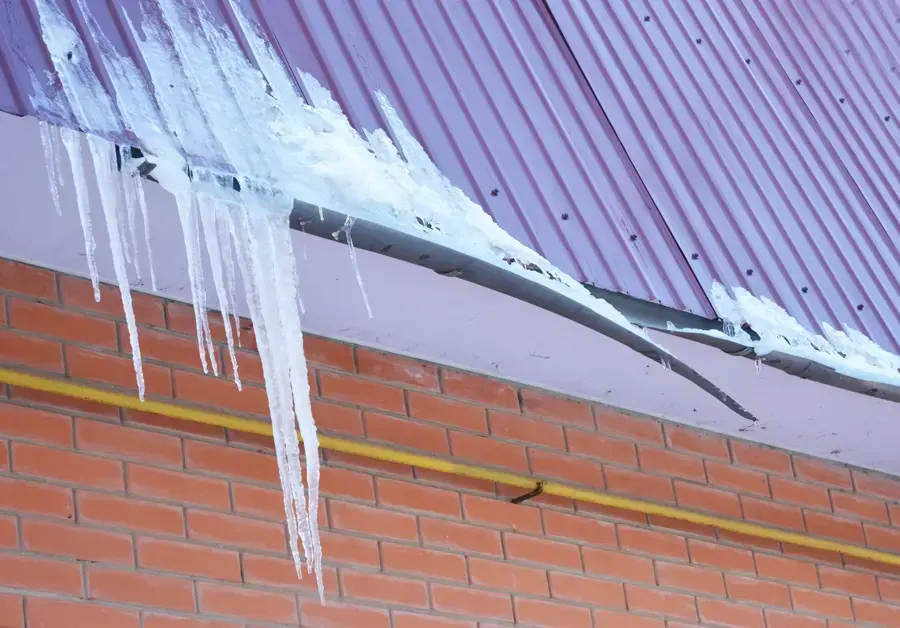
First steps for ice dam and roof leak water damage in Dedham
- Protect the room. Move furniture and rugs out from under the stain, and set a tub or plastic sheeting beneath any active drip.
- Keep people clear. Stay out from under a bulging or sagging ceiling, because saturated plaster and drywall can drop without warning.
- Call a roofer too. The drying team handles the interior, but clearing the ice dam and stopping new leaks is roofing work.
- Photograph everything. Capture the ceiling, the roof edge, wet insulation and any ice, with dates, before anything is moved or removed.
How ice dam and roof leak water damage is handled in Dedham
An ice dam is a roofing problem first and a water damage problem second, and a Dedham home needs both fixed. Heat that escapes into the attic melts roof snow, the meltwater runs to the cold eave and refreezes, and the growing ridge of ice pushes water back up under the shingles. From there it soaks insulation, stains the ceiling and runs down the walls. The roofer stops new leaks, and the drying team handles everything the water already reached inside.
What does ice dam and roof leak water damage cost in Dedham, MA?
Ice dam jobs in Dedham usually land between about $1,500 for one ceiling caught early and $18,000 when plaster comes down across several floors, depending on how much insulation is wet and how many days of drying follow after the roof is repaired.
One ceiling, found early
- Attic and ceiling readings taken
- Soaked insulation bagged out
- Ceiling dried where it hangs
Ceilings plus wall cavities
- Several top-floor rooms affected
- Exterior wall cavities opened and dried
- Daily readings with photos
Plaster down on several floors
- Sagging plaster removed safely
- Water followed to lower floors
- Containment and longer drying
Ranges are typical, not a quote: the category of water, the square footage, the material class and how fast drying started move the number most. The water damage cost calculator gives a closer range.
The ice dam and roof leak water damage process, step by step
The tech who does the walkthrough maps moisture before any equipment goes down, so the drying plan matches what is actually wet. Equipment stays until the readings say dry.
Map the wet zone
Thermal imaging and meters show how far the water traveled from the eave.
Remove saturated material
Wet insulation comes out, and sagging plaster or drywall is taken down.
Dry what remains
Air movers and dehumidifiers work on the ceiling, framing and wall cavities.
Confirm dry
Final readings match unaffected materials before the equipment leaves.
What the damage looks like indoors
Ice dam water seldom shows at the roof itself. It appears as brown rings on a top-floor ceiling, bubbling paint near an exterior wall or drips at a window header after a thaw. Wet insulation is usually the culprit, because it holds water against the ceiling for weeks and keeps feeding the damage long after the snow is gone. About one third of Dedham's homes date to 1939 or earlier, and a saturated plaster ceiling in an older house can let go all at once.
- Thermal imaging and meter readings locate wet insulation and plaster
- Saturated insulation is bagged and removed so the ceiling can dry
- Sagging plaster or drywall comes down before it can fall
- Wall cavities below the eave are opened where readings stay high
How the dry out is handled
Once a roofer has stopped new water from getting in, the team extracts what it can, removes the wet insulation and sets air movers and dehumidifiers. Cavities that cannot be reached from the room are dried through small openings, and attic airflow gets checked so drying does not trap moist air under the roof deck. Documentation continues daily: each visit adds readings, photos and an equipment count to the file.
Dedham winters and what to watch for
Dedham's 2019 Community Resilience Building report lists winter storm events among the pressures on the town, and Boston's record 110.6 inches of snow in the winter of 2014 to 2015 shows how heavy a New England season can get across the region.
A heavy snow year followed by a thaw sets up eave leaks. A stained ceiling after warm weather can also be a ceiling leak from another source, and cold snaps add frozen pipe bursts to the same winter loss.
Ice Dam and Roof Leak Water Damage across Dedham and nearby towns
Ice dam and roof leak work in Dedham runs across the older streets of East Dedham and Dedham Village as well as Oakdale, Greenlodge, Riverdale, Sprague and West Dedham, plus multifamily buildings where an attic leak reaches several units.
The same service nearby: ice dam and roof leak water damage in Brookline, Needham, Milton.
Ice Dam and Roof Leak Water Damage questions in Dedham, MA
Ice Dam and Roof Leak Water Damage in Dedham, 24/7
Ceiling stained after a thaw? Describe it to the Dedham drying team before the damage spreads.
(888) 629-3140 Call about roof leak dryingWhat causes an ice dam leak?
Heat escaping from the living space melts snow on the roof, the meltwater refreezes at the cold eave, and the ice ridge makes water back up under the shingles and into the attic.
Does a small ceiling stain need professional drying?
A stain usually means insulation above it is wet, and wet insulation keeps feeding the ceiling. Readings from a meter and a thermal camera show whether the damage is isolated or still spreading.
Can the drying team remove the ice dam?
No. Clearing ice from a roof is a roofer's job. The drying team focuses on the water that already reached the insulation, ceilings and walls.
How does a heavy snow year affect Dedham roofs?
Boston's record 110.6 inches of snow in winter 2014 to 2015 was a regional extreme, and any heavy snow followed by a thaw raises the odds of eave leaks in older homes.
Will the ceiling have to come down?
Not always. Plaster that is stained but firm can often be dried in place, while sagging or bulging sections come down for safety before the cavity above is dried.
What records support a roof leak claim?
Dated photos of the roof edge, the ceiling and the wet insulation, plus daily moisture readings and the equipment log, give an adjuster a clear picture of the loss.
Stop the water from spreading down the walls
A short call covers what the ceiling looks like, whether insulation is wet and what the walkthrough will check, so the drying plan starts on solid ground.
Call (888) 629-3140Call the Dedham roof leak team