Water Extraction and Removal in Brookline, MA
Every hour water sits, it wicks further into baseboards, plaster and subfloor. The extraction crew pulls it out with truck-mounted and portable units, then maps the moisture so drying starts right away.
Call (888) 629-3140Standing water on the floor? Call now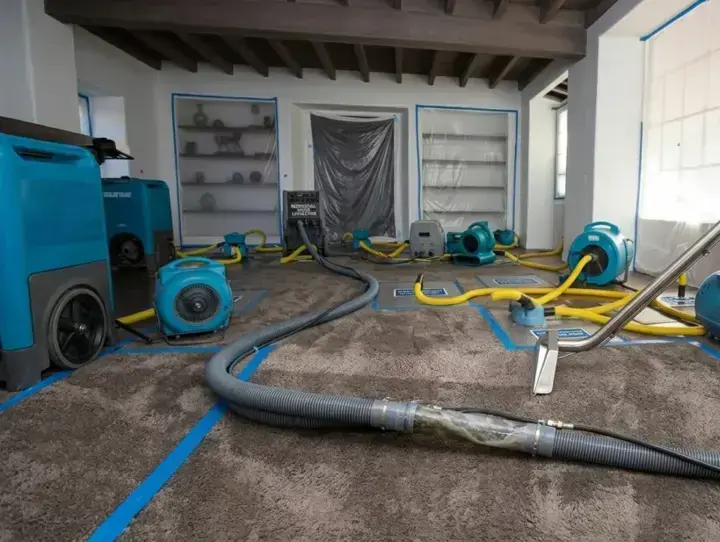
First steps for water extraction and removal in Brookline
- Stop the source. Shut the fixture valve or the main so the water stops coming.
- Stay clear of outlets. Do not walk through water near outlets, cords or the panel.
- Lift what floats or wicks. Move rugs, papers, cords and furniture off the wet floor.
- Photograph the water. Take photos of the standing water before extraction starts.
How water extraction and removal is handled in Brookline
Extraction removes far more water than evaporation ever will, which is why it comes first. The extraction crew runs truck-mounted units where hoses can reach and portable extractors in upper-floor condos and tight basements. Weighted extraction tools press water out of carpet and pad, wands and squeegees clear hard floors, and submersible pumps handle deep basement water. The tech who does the walkthrough then maps what is still wet, so air movers and dehumidifiers go where they are needed.
What does water extraction and removal cost in Brookline, MA?
In Brookline, MA, water extraction typically runs $600 to $4,500 on its own, depending on how much water there is, how far it spread and whether truck-mounted or portable equipment can reach it. Drying is usually priced with it.
One room
- Portable or truck-mounted extraction
- Carpet, pad or hardwood
- Clean water
Extraction plus drying
- Several rooms or a basement
- Moisture mapping after extraction
- Air movers and dehumidifiers
Deep or contaminated water
- Pumps for deep basement water
- Gray or black water handling
- Removal of soaked pad and materials
Ranges are typical, not a quote: the category of water, the square footage, the material class and how fast drying started move the number most. The Brookline water damage cost calculator gives a closer range.
The water extraction and removal process, step by step
The tech who does the walkthrough maps moisture before any equipment goes down, so the drying plan matches what is actually wet. Equipment stays until the readings say dry.
Stop the water
The source is shut off before extraction begins.
Extract
Truck-mounted or portable units pull the standing water.
Map what is left
Meters show what is still wet after extraction.
Start drying
Air movers and dehumidifiers go where the map says.
Truck-mounted and portable water extraction
A truck-mounted extractor has the most suction and pulls water fast through long hoses. In a third-floor condo on Beacon Street or a basement with a narrow stair, portable extractors and pumps do the work. Both serve the same goal: get the water out before it moves into walls and subfloor.
- Truck-mounted extraction for large and ground-floor losses
- Portable extractors for upper floors and tight spaces
- Weighted extraction tools for carpet and pad
- Submersible pumps for deep basement water
- Squeegees and wands for hardwood, tile and concrete
Extraction on hardwood, carpet and plaster
Hardwood is extracted and then dried, with floor drying panels where boards cup. Carpet over pad can often be saved after clean water if extraction starts fast, while pad comes out after gray or black water. Water at the base of plaster walls is extracted and the walls are read for wicking.
The EPA's moisture and mold pages are the reason extraction is urgent: wet materials should be dried within 24 to 48 hours.
After water extraction: the drying
Extraction ends the standing water, not the loss. The drying team sets air movers and LGR dehumidifiers by the class of loss and reads the materials every day, as described under structural drying. The flood safety pages at Ready.gov cover the safety steps before anyone walks into deep water.
Water Extraction and Removal across Brookline and nearby towns
Brookline Water Damage Restoration covers ZIP 02445 and 02446, from Coolidge Corner, Washington Square and Longwood on the north side to Brookline Village, Pill Hill, Fisher Hill, Chestnut Hill and the homes of South Brookline.
Nearby coverage reaches Allston, Brighton, Jamaica Plain, West Roxbury, Newton, Milton, Dedham, Needham, Quincy, Wellesley.
Related water damage services in Brookline
Water Extraction and Removal questions in Brookline, MA
Water Extraction and Removal in Brookline, 24/7
Standing water in Brookline? The extraction crew pulls it out 24/7.
(888) 629-3140 Call for Brookline water removalCan the carpet be saved after water extraction?
After clean water, often yes, if extraction starts fast and the pad is dried or replaced. After gray or black water, the pad comes out and the carpet is usually removed.
What is the difference between extraction and drying?
Extraction removes liquid water with suction and pumps. Drying removes the water that soaked into materials, with air movers and dehumidifiers over several days.
Can water be extracted from an upper-floor condo?
Yes. Portable extractors and long hoses reach upper floors and tight stairs where a truck-mounted unit cannot.
How fast should water be extracted?
As soon as possible. Water moves into baseboards, plaster and subfloor quickly, and wet materials should be dried within 24 to 48 hours.
Is a wet-dry vacuum enough?
For a small clean spill, it helps. It cannot pull water out of pad, subfloor or plaster, and it does not measure what is still wet.
How much does water extraction cost?
Most Brookline extraction jobs run $600 to $4,500, set by the volume of water, the spread and access. The water damage cost calculator gives a typical range.
Water still on the floor? Get extraction started now.
Extraction removes far more water than drying alone. The extraction crew pulls it out and maps what is left.
Call (888) 629-3140Get the Brookline water out now