Structural Drying and Dehumidification in Brookline, MA
Framing, subfloor, plaster and hardwood hold water long after the surface feels dry. The drying team sizes air movers and dehumidifiers to the loss and reads every material each day until it is dry.
Call (888) 629-3140Need the structure dried right? Call now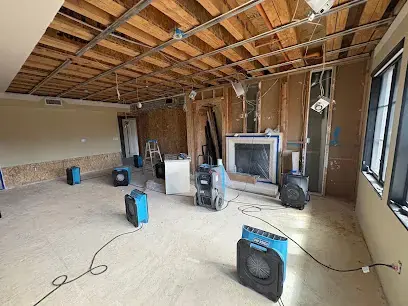
First steps for structural drying and dehumidification in Brookline
- Leave the equipment running. Air movers and dehumidifiers work around the clock, and switching them off slows drying.
- Keep doors and windows as set. The drying team sets each room up as a closed drying area for the dehumidifiers.
- Keep the heat on in winter. Warm air holds more moisture for the dehumidifiers to pull out.
- Wait before closing up walls. Hold off on painting, patching or new flooring until the readings say dry.
How structural drying and dehumidification is handled in Brookline
Structural drying follows the IICRC S500 standard: measure, set the equipment to the load and keep reading until the numbers say dry. The drying team maps every wet material, picks a dry reference in an unaffected part of the house and sets air movers and dehumidifiers by the class of loss. Each day the team logs temperature and humidity inside and outside the drying area and reads the wet materials, moving or adding equipment until they match the reference.
What does structural drying and dehumidification cost in Brookline, MA?
In Brookline, MA, structural drying typically runs $1,500 to $8,000 on its own, depending on how many rooms are wet, the class of loss and how many days of equipment it takes to reach a dry reference.
One room, Class 1 or 2
- Air movers and an LGR dehumidifier
- Daily readings
- Three to four days typical
Several rooms or Class 3
- Walls and ceilings dried
- Cavity drying through small openings
- Psychrometric logs
Class 4: plaster, hardwood, masonry
- Floor drying panels or desiccants
- Extended equipment days
- Final readings for the claim
Ranges are typical, not a quote: the category of water, the square footage, the material class and how fast drying started move the number most. The Brookline water damage cost calculator gives a closer range.
The structural drying and dehumidification process, step by step
The tech who does the walkthrough maps moisture before any equipment goes down, so the drying plan matches what is actually wet. Equipment stays until the readings say dry.
Map and set a reference
Every wet material is mapped and a dry reference is chosen.
Size the equipment
Air movers and dehumidifiers are set by the class of loss.
Read every day
Temperature, humidity and material readings are logged daily.
Verify dry
Equipment comes out when materials match the reference.
Classes of loss and the drying equipment they call for
The class describes how much water the materials absorbed, and it sets how many air movers and how much dehumidification a room needs.
- Class 1: part of a room, mostly low-porosity materials
- Class 2: a whole room, with carpet and the bottom of the walls wet
- Class 3: water from above, with walls and ceilings soaked
- Class 4: dense materials such as hardwood, plaster and concrete that need special drying
Drying plaster, hardwood and old framing in Brookline
Brookline's older homes put more Class 4 materials in play than most towns. Plaster on lath and thick old framing release water slowly. Hardwood floors may need drying panels that pull air through the boards, and dense masonry and concrete often need desiccant dehumidifiers, which keep working in cool basements where refrigerant units slow down.
The EPA's moisture and mold pages explain why drying within 24 to 48 hours matters, and the EPA's indoor air quality pages cover humidity inside the home.
When structural drying is done
Drying is done when the wet materials read within 2 to 4 points of the dry reference, not when they look or feel dry. The final readings go into the claim file with the daily logs, so the adjuster and the repair contractor can see that the structure was dry before walls were closed and floors refinished.
Structural Drying and Dehumidification across Brookline and nearby towns
Brookline Water Damage Restoration covers ZIP 02445 and 02446, from Coolidge Corner, Washington Square and Longwood on the north side to Brookline Village, Pill Hill, Fisher Hill, Chestnut Hill and the homes of South Brookline.
Nearby coverage reaches Allston, Brighton, Jamaica Plain, West Roxbury, Newton, Milton, Dedham, Needham, Quincy, Wellesley.
Related water damage services in Brookline
Structural Drying and Dehumidification questions in Brookline, MA
Structural Drying and Dehumidification in Brookline, 24/7
Need a Brookline home dried to the standard? The drying team runs 24/7.
(888) 629-3140 Ask about Brookline structural dryingWhat is a dry reference?
A reading from the same kind of material in an unaffected part of the house. Wet materials are dry when they read within 2 to 4 points of it.
Why are there so many fans and dehumidifiers?
Air movers pull water out of the surface of wet materials, and dehumidifiers remove that water from the air. The number of each is set by the class of loss and the size of the area.
Can I turn the drying equipment off at night?
Turning it off slows drying and lets humidity climb. The drying team sets it to run around the clock until the readings say dry.
What is the difference between an LGR and a desiccant dehumidifier?
An LGR unit uses refrigeration and works well in warm rooms. A desiccant unit uses a drying wheel and keeps working in cool basements and on dense materials.
How long does structural drying take?
Most Class 1 and 2 losses dry in three to five days. Plaster, hardwood and masonry often take a week or more.
Why can't the wall be painted once it looks dry?
The inside of the wall and the framing can still hold water. Closing or painting a wet wall traps moisture, so the readings decide.
Still wet behind the walls? Get the drying started today.
Structural drying is measured, not guessed. The drying team reads every material daily until it matches a dry reference.
Call (888) 629-3140Start the Brookline structural drying