Water Extraction and Removal in Dedham, MA
Standing water in Dedham follows burst pipes, appliance failures and storm flooding, and the extraction crew removes it from carpet, pad, hardwood and tile before it soaks further into the structure.
Call (888) 629-3140Dedham standing water help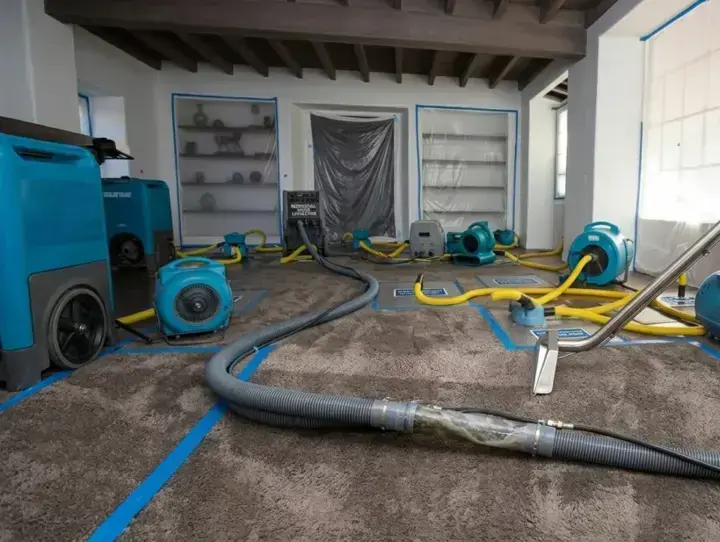
First steps for water extraction and removal in Dedham
- Stop the source. Close the valve or switch off the appliance feeding the water, if it is safe.
- Lift what can move. Raise furniture, rugs and boxes off wet floors and bag soaked textiles.
- Skip the household vacuum. A household vacuum is not built for water, so leave it to the crew.
- Photograph the water. Record the depth and wet areas, with dates, before anything moves.
How water extraction and removal is handled in Dedham
Extraction is the biggest early step in any water job, because each gallon pulled out now is moisture the dehumidifiers never have to remove later. In Dedham, standing water comes from burst pipes and appliances, but also from storm flooding along the Charles River, Mother Brook and other canals, and certain areas of the Manor Neighborhood flood during and after heavy rainfall.
What does water extraction and removal cost in Dedham, MA?
One wet Dedham room usually costs $600 to $1,500 to extract, extraction plus drying runs $1,500 to $4,500, and deep or contaminated water reaches $15,000 once pumps, disposal and extra drying come in.
One wet room
- Water pulled with one extractor
- Carpet, pad or hardwood floor
- Clean supply water
Extraction plus drying
- Several rooms or a lower level
- Moisture mapping after extraction
- Air movers and dehumidifiers
Deep or contaminated water
- Pumps for deep standing water
- Gray or black water handling
- Soaked pad and materials removed
Ranges are typical, not a quote: the category of water, the square footage, the material class and how fast drying started move the number most. The water damage cost calculator gives a closer range.
The water extraction and removal process, step by step
The tech who does the walkthrough maps moisture before any equipment goes down, so the drying plan matches what is actually wet. Equipment stays until the readings say dry.
Assess the water
The crew identifies the category and depth before choosing equipment.
Pump and extract
Pumps clear deep water and extractors work the floors.
Map what remains
Meters and thermal imaging find moisture the extractors missed.
Hand off to drying
Dehumidifiers and air movers take over.
Choosing the right extractor
Portable extractors handle a single room or a stairwell of wet carpet, while a truck-mounted unit pulls from a hose run outside and moves far more water through each pass. Deep standing water goes to submersible pumps first, and then the extractors work the carpet, pad and hard floors until the surface is damp rather than wet.
The crew checks the water first, because clean supply water, gray water and sewage need different handling and different gear before the wand ever touches the floor.
- Carpet is lifted so the pad can be extracted or removed
- Hardwood is extracted through the boards with a floor tool
- Tile and sealed floors are cleared and checked at the seams
- Soaked pad is discarded rather than dried
What happens after extraction
Extraction never finishes the job alone, because water soaks into baseboards, subfloors and wall bottoms where an extractor cannot reach. A pinless meter and thermal camera map what stayed wet, and air movers and dehumidifiers take over from there. Readings taken during that visit become the starting point for the daily checks that follow.
Dedham flood water and contamination
Water that arrives from a river or canal in a storm is Category 3, and Dedham's climate plan names the Charles River and Mother Brook among the major flooding risks. That moves the job into storm and flash flood cleanup, while a smaller pump-out belongs with basement flooding cleanup.
Water Extraction and Removal across Dedham and nearby towns
Extraction crews work throughout Dedham, including Manor and the Mother Brook corridor in East Dedham, Riverdale along the Charles River, and the Route 1 retail district, wherever standing water sits on a floor.
The same service nearby: water extraction and removal in Brookline, Needham, Milton.
Water Extraction and Removal questions in Dedham, MA
Water Extraction and Removal in Dedham, 24/7
Standing water in the house? Tell the Dedham drying team how deep it is and what floors it covers.
(888) 629-3140 Call about water removalHow quickly should standing water be removed?
As early as possible, because wet carpet, pad and subfloor start to degrade and invite mold growth within a day or two, and early extraction keeps more materials savable.
Can carpet be saved after extraction?
Often, when the water was clean and was removed early. Pad usually has to be discarded, but the carpet itself can be cleaned, lifted and dried on a rack or in place.
Does extraction work on hardwood floors?
Yes, through specialized floor tools and drying panels that draw water out of the boards, but cupped or buckled hardwood needs careful drying and sometimes replacement.
Where does storm water in Dedham come from?
Storm flooding in town centers on the Charles River, Mother Brook and other canals, and certain areas of the Manor Neighborhood flood during and after heavy rainfall.
What if the water is not clean?
Gray or black water changes the plan: soaked pad and porous materials come out, surfaces are treated, and the job moves toward sewage or storm flood handling.
What records come out of an extraction visit?
Dated photos, the water category, the areas extracted and the first moisture readings start the claim file that daily drying visits then add to.
Pull the water out before it soaks in
A short call covers the depth, the source and the floor types, so pumps and extractors match the job.
Call (888) 629-3140Call about Dedham water extraction