Structural Drying and Dehumidification in Milton, MA
After the water is out, the drying team brings the structure back to a dry standard with air movers, dehumidifiers and daily readings, and keeps going until every material tests dry.
Call (888) 629-3140Plan a Milton structural dry-out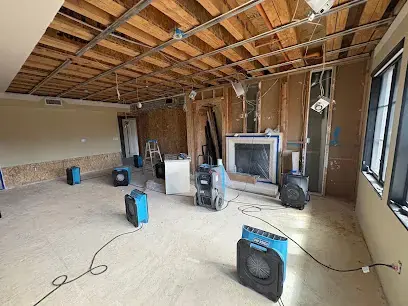
First steps for structural drying and dehumidification in Milton
- Keep doors and windows shut. Closed rooms let the dehumidifiers work, so keep openings shut unless told otherwise.
- Leave the equipment alone. Do not move, unplug or switch off air movers and dehumidifiers, because the readings depend on them.
- Open cabinet doors. Let air reach wall bases and cabinet backs by opening doors and moving furniture out from the wall.
- Keep the logs. Save the daily readings and photos, since they show the insurer the drying progress.
How structural drying and dehumidification is handled in Milton
Structural drying starts once standing water is out and the materials still hold moisture. Air movers push dry air across wet surfaces, LGR dehumidifiers pull the water out of the air, and meters track every wall, floor and ceiling until each one reads dry. In Milton, where 45.8% of housing units were built in 1939 or earlier, that can mean drying plaster, old hardwood and masonry.
What does structural drying and dehumidification cost in Milton, MA?
Drying cost follows the class of loss. One room with light moisture starts near $1,500, several rooms or wet ceilings run up to $8,000, and plaster, hardwood or masonry can reach $14,000 with longer equipment time.
One room, light moisture
- Air movers and one dehumidifier
- Daily moisture readings
- Short equipment schedule
Several rooms or wet ceilings
- Walls and ceilings dried
- Cavities dried through small holes
- Temperature and humidity logs
Plaster, hardwood or masonry
- Floor drying panels or desiccants
- Longer equipment schedule
- Dry standard readings on file
Ranges are typical, not a quote: the category of water, the square footage, the material class and how fast drying started move the number most. The water damage cost calculator gives a closer range.
The structural drying and dehumidification process, step by step
The tech who does the walkthrough maps moisture before any equipment goes down, so the drying plan matches what is actually wet. Equipment stays until the readings say dry.
Map the moisture
Meters and a thermal camera show where water remains.
Set the equipment
Air movers and LGR dehumidifiers are sized and placed for the space.
Adjust and monitor
Readings every visit decide when equipment moves or leaves.
Confirm dry standard
Readings match a dry reference before the equipment leaves.
How drying classes are judged
Class one and two losses wet a limited area or materials that release water quickly. Class three means water came from above and soaked walls and ceilings. Class four covers dense materials such as plaster, hardwood and masonry, which need floor drying panels or desiccants and a longer schedule.
- Moisture mapped with pinless and probe meters
- Air movers placed to sweep every wet surface
- LGR dehumidifiers sized to the volume of the space
- Temperature and humidity logged each visit
Drying walls and ceilings in place
Wet cavities can often be dried through small openings, so walls and ceilings stay intact. Where plaster or insulation has been soaked for long, sections are opened so air can reach the framing behind them.
Wet springs and damp houses
Milton's wet springs can slow drying, because humid outdoor air limits how much moisture the house can shed. Closed rooms, dehumidifiers and controlled airflow keep the drying on track, and readings show whether the weather is helping or not.
Proof that the structure is dry
The drying team compares each reading with a dry reference from unaffected material of the same type. Equipment comes out only when the numbers match, and the daily log goes into the claim file.
Drying usually follows water extraction, and larger losses such as a ceiling leak or a burst pipe depend on it.
Structural Drying and Dehumidification across Milton and nearby towns
Structural drying runs throughout Milton, across houses and buildings in Milton Village, Lower Mills, East Milton, East Milton Square, Central Avenue, Brush Hill, Milton Hill, Quarry Hills and the Blue Hills area.
The same service nearby: structural drying and dehumidification in Brookline, Quincy, Dedham.
Structural Drying and Dehumidification questions in Milton, MA
Structural Drying and Dehumidification in Milton, 24/7
Walls still damp in a Milton house? The drying team can set up the equipment.
(888) 629-3140 Milton structural drying helpHow long should drying equipment run?
It runs until the readings match a dry reference, not for a fixed number of days. Thick materials such as plaster, hardwood and masonry usually need the longest schedule.
Why is the dehumidifier more important than the fans?
Air movers only move moisture off surfaces into the air. The dehumidifier takes it out of the air, which is what lets materials keep releasing water instead of stalling.
Can walls be dried without opening them?
Often yes. Small openings let warm dry air into the cavity, and insulation that is soaked is removed through them. Walls are opened wider only where readings stay high.
Will the equipment raise the electric bill?
Running several machines does draw power, which is a normal part of drying. The cost of that electricity is sometimes included in the claim, so the equipment log helps the adjuster.
What are the dry readings compared with?
Unaffected material of the same type in the same building, such as a dry wall or floor, gives the reference. That keeps the target realistic for old plaster and new drywall alike.
Does drying prevent mold?
Fast drying is the best protection. When materials return to normal readings quickly, mold has little chance to start, which is why the first days matter most.
Finish the dry-out the right way
Surfaces that feel dry can still hold moisture inside. The Milton water damage pros can map it, set the equipment and prove the result with readings.
Call (888) 629-3140Book a drying assessment