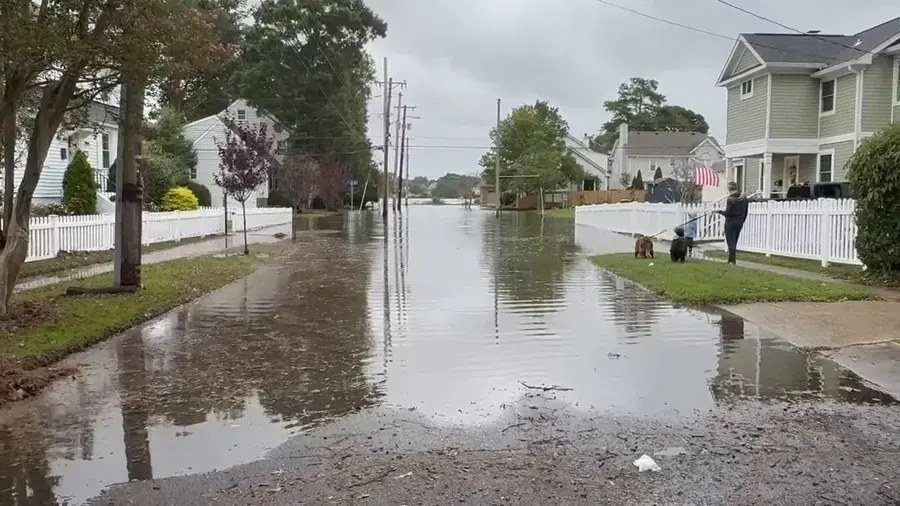
The Town of Dedham has identified the Manor Neighborhood as a place where certain areas experience significant flooding during and after heavy rainfall. For a household there, the practical question is what the first day after the water arrives should look like.
Key takeaways
- Certain areas of Dedham's Manor Neighborhood experience significant flooding during and after heavy rainfall.
- Water from a river, canal or overloaded drain carries soil and contamination, so it is handled as Category 3.
- The first day is for safety, photographs, lifting belongings and pumping, in that order.
- The Town, the Neponset River Watershed Association and Weston & Sampson built a flood model for the Manor, and a second phase will evaluate flood reduction strategies.
- Drying after the water is out is measured with readings and continues until each material reaches a dry reference.
What Dedham has said about the Manor Neighborhood
The Manor is one of the places the Town has studied closely. Certain areas of it experience significant flooding during and after heavy rainfall.
The Town of Dedham, the Neponset River Watershed Association and Weston & Sampson built a detailed flood model of the Manor under a state Municipal Vulnerability Preparedness Action Grant. A second phase will evaluate flood reduction strategies and a possible flood overlay district.
The Town's own reporting points the same way. Dedham's 2019 Community Resilience Building report says the town has been affected by flooding from more frequent extreme rainfall and winter storm events.
A study describes risk. It does not remove water from a house, so what a household does in the first day still decides how much damage follows.
That first-day response is described under storm and flash flood cleanup in Dedham.
Where Dedham's flood water comes from, and what the maps say
Rivers and canals
Dedham's 2020 climate plan says the Charles River, Mother Brook and other canals lead to major flooding risk during storm events.
The state Department of Conservation and Recreation manages Mother Brook for flood control. The brook, dug by the town in 1639, carries part of the Charles River flow to the Neponset River.
Drains and wetlands
Catch basins and culverts collect Dedham's stormwater and carry it to local rivers, streams and wetlands. Wetlands cover more than 1,200 acres, nearly 18% of the town.
Dedham lies in the Boston Harbor Watershed and in two sub-watersheds, the Charles River Watershed and the Neponset River Watershed. Fowl Meadow is the largest contiguous wetland area in the Neponset River basin.
Heavy rain runs to low ground first, so a house that sits low beside a street, a brook or a wetland sees the water before its neighbors do.
Maps and the overlay district
Dedham's Master Plan says FEMA's maps, most recently updated in 2017, show the 100-year and 500-year floodplains, which closely follow the town's waterways and wetlands.
The Flood Plain Overlay District regulates development in all flood hazard areas, and filling or building there is prohibited except for recreation, agriculture and structures that do not impede flood flow.
Neither one tells an owner whether a particular house will take on water in the next storm. In its September 2026 summit updates, the Town also lists the River Street and Winthrop Street Stormwater Improvements as completed construction to mitigate flooding and improve water quality.
The first day after water enters a house
The order of the first day matters more than speed alone.
- Stay out of standing water until power to the area is confirmed off and the water has been checked.
- Photograph the water height on walls, furniture and appliances before moving anything.
- Lift documents, electronics and small furniture to upper floors or high shelves.
- Ask for extraction early, because water left in place keeps wicking into walls and floors.
- Ask for the readings from the first visit in writing, so later progress can be compared.
What the extraction crew does first
The extraction crew pumps standing water, then pulls loose water from carpet and floors with truck-mounted or portable equipment. Water extraction in Dedham comes before anything else, because the longer water stays in a floor, the more of it moves into the materials.
Where a house has a basement that has flooded, the pumping is paced to the water outside so the walls are not loaded by saturated ground. A flooded lower level is handled under basement flooding cleanup.
Mud and debris are shoveled out next, and the surfaces underneath are washed and treated.
A furnace, a water heater or an appliance that sat in floodwater is not restarted until it has been checked.
Storm water cleanup is not a leak cleanup
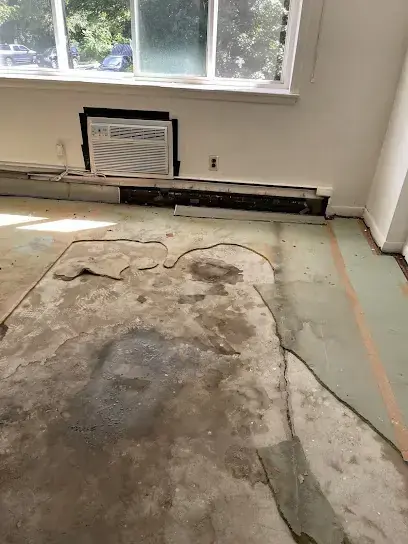
Water from a river, canal or overloaded drain carries soil and bacteria with it, so it is Category 3 even when it looks clear. The cleanup is built around that fact.
Photographs come before disposal, so each soaked item has a record.
- Taken out: soaked carpet, pad, insulation and the lower stretch of wet drywall
- Washed and treated: hard floors, concrete, metal and framing the water touched
- Dried to a goal: framing, subfloor and plaster, with readings logged at each visit
Before the next heavy rain
Households in or near a flood-prone area can prepare in ways that do not depend on a forecast.
- Move valuables, documents and electronics off the floor of the lowest level
- Know where the electrical panel and the main water shutoff are
- Photograph the lowest level in its normal state, so a later comparison is clear
- Keep gutters and downspouts clear and pointing away from the foundation
- Keep a list of the belongings stored in the lowest level, with photographs
Drying and what comes next
Dedham has a warm-summer humid continental climate with precipitation through the whole year, so drying works against damp air as well as wet materials.
Dehumidifiers and air movers are placed from the readings, and the team checks them at each visit. About 33% of Dedham's homes were built in 1939 or earlier, and older plaster and framing take time to give up water.
The method is the same IICRC S500 approach used on every job, with air movers and dehumidifiers sized from the readings rather than from the room.
The water may be gone in a day, but the structure is not dry until the readings say so.
Everything else the team handles in town is listed under water damage restoration in Dedham.
Questions
Which parts of Dedham flood during heavy rain?
The Town names certain areas of the Manor Neighborhood as flooding significantly during and after heavy rainfall. Its 2020 climate plan also names the Charles River, Mother Brook and other canals as major flooding risks in storm events.
What is the Manor flood model?
It is a detailed model built by the Town of Dedham, the Neponset River Watershed Association and Weston & Sampson under a state grant. A second phase will evaluate flood reduction strategies and a possible flood overlay district.
What does Dedham's climate plan say about flooding?
The Sustainable Dedham Climate Action and Resiliency Plan, dated 2020, says the Charles River, Mother Brook and other canals lead to major flooding risk in Dedham during storm events.
Is storm water different from water from a broken pipe?
Yes. Storm water carries soil, debris and bacteria, so it is handled as Category 3 and the porous materials it soaked are removed.
How soon should pumping start?
As soon as it is safe to enter. A flooded lower level is pumped in stages while the ground outside is still wet.
Can wet drywall be dried instead of removed after a flood?
Drywall and insulation that floodwater touched are usually removed, because contamination soaks in. Framing and subfloor are cleaned, treated and dried.