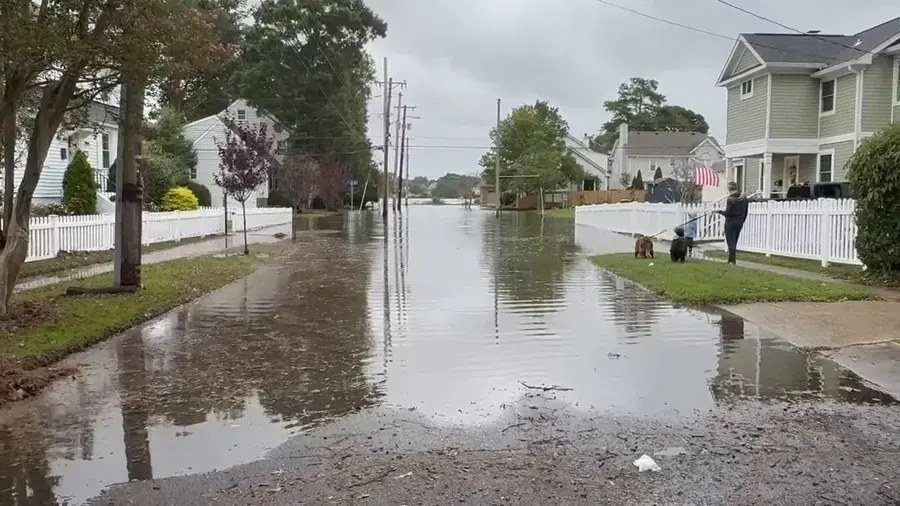
Milton lies between the Neponset River to the north and the Blue Hills to the south, and most of its stormwater drains to Pine Tree Brook or Unquity Brook before reaching the river. When the river or a brook overflows, the water that enters a building is a different problem from water out of a broken pipe.
Key takeaways
- River and brook water is handled as Category 3, contaminated floodwater, even when it looks clear.
- Neponset River flooding inundated Milton station on the Mattapan trolley on February 18, 2025, a reminder that river water can reach places that normally stay dry.
- Standing floodwater is kept at a distance, wet electrical equipment is left alone and the water height is photographed before anything is moved.
- Carpet, pad, insulation and wet drywall are usually removed, while hard surfaces and framing are cleaned, treated and dried.
- Milton Public Works hosts an online FEMA flood zone mapper, and Zone A and Zone AE are the mapped 1% annual chance flood areas.
Why river water is not the same as a leak
A broken supply pipe releases clean water from one known spot. A river or brook carries soil, debris, runoff and sometimes sewage, so floodwater is classed as Category 3 whatever it looks like.
That changes the job. The goal is no longer only to dry the building but to take out what the water brought in, which usually includes:
- Mud and silt on floors, stairs and the base of walls
- Debris carried in from yards and streets
- Contamination that soaks into carpet, pad, insulation and drywall
- Odors that linger when porous materials stay in place
What Milton's own record shows
The February 18, 2025 flooding
Neponset River flooding inundated Milton station on the Mattapan trolley on February 18, 2025. Service stopped, and a raft was used for a rescue.
It is one dated example of river water reaching a place that normally stays dry.
Brooks, dams and the flood plain district
Pine Tree Brook runs from Hillside Pond on the north slope of the Blue Hills across town to the Neponset at Milton Village. Its Harland Street Detention Project dam controls flood water within a 280 acre conservation and flood control easement.
Turner's Pond is a 25.7 acre flood management and conservation area between Central Avenue and Brook Road, beside Glover Elementary School. The Walter Baker Dam at Lower Mills crosses the Neponset, and below it the river widens into the Neponset River Estuary.
Milton's flood plain district covers the areas mapped as Zone A or Zone AE. The town's draft Climate Action Plan, dated June 20, 2025, says more homes and businesses will be affected by rising stormwater, particularly those along brooks, streams, rivers, estuaries and wetlands.
The first hours: what to do and what to leave alone
The early steps are about safety and records, not about repairs.
- Stay out of standing water, which can hide debris, open drains and live wiring.
- Leave wet electrical equipment alone, and let an electrician or the utility turn off power to a flooded area.
- Photograph the water height on walls and furniture before anything is moved.
- Lift valuables, documents and electronics to upper floors or high shelves.
- Keep children and pets out of the affected rooms.
What the extraction crew does first
The extraction crew pumps standing water and pulls loose water from carpet and floors with truck-mounted or portable equipment. Mud and debris are shoveled out next.
Where a lower level is flooded and the ground outside is still saturated, the water is pumped out in stages. Emptying it too fast can put pressure on the walls.
Water extraction starts as soon as it is safe to enter, since water left in place keeps wicking into floors and walls.
A furnace, a water heater or an appliance that sat in floodwater is not restarted until it has been checked, even if it looks fine.
What the cleanup removes, and what it keeps
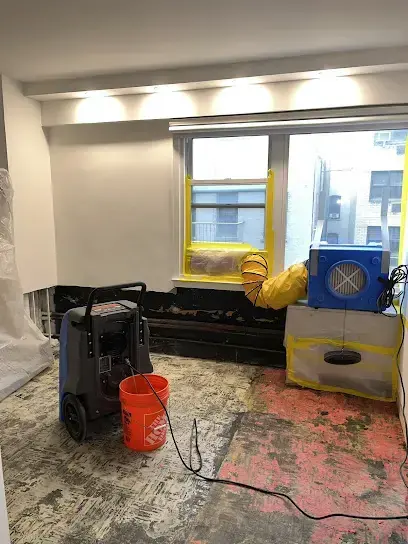
After the water is out, the team sorts what can be cleaned from what cannot. The order is the same each time in storm and flash flood cleanup: make the area safe, remove the water and mud, strip and treat, then dry.
- Removed: carpet, pad, insulation and drywall that floodwater touched, bagged out after photos.
- Cleaned and treated: tile, sealed concrete, metal and framing, washed and treated with an antimicrobial.
- Dried in place: framing and subfloor, once the surfaces are clean.
Belongings: what can be kept and what goes
Hard items such as metal tools, glass and solid plastic can be washed and treated. Porous items that floodwater soaked usually cannot be made safe.
Photographs of each discarded item come first, because they are the record of what was lost.
- Washed and treated: metal, glass, solid plastic and sealed wood
- Discarded after photos: mattresses, upholstery, carpet and pad, and particle board
- Set aside for the owner: documents, photographs and keepsakes, flagged before anything is bagged
Checking whether a property sits in a mapped flood zone
Milton Public Works hosts an online FEMA flood zone mapper where a property can be looked up. Zone A and Zone AE are the mapped special flood hazard areas, defined as 1% annual chance flood areas, and only Zone AE shows a base flood elevation.
A map shows where flooding is expected, not where it has already happened. A property outside a mapped zone can still take on water from a brook or from a heavy burst of rain.
After the river drops: drying and records
Once the water and mud are out, drying decides how the job finishes. Wet framing and plaster left damp can begin to grow mold in 24 to 48 hours, so dehumidifiers and air movers go in early.
Milton's housing is older: about 45.8% of its housing units were built in 1939 or earlier. Plaster, old framing and hardwood dry slowly, so readings are taken at each visit until every material reaches its dry goal.
The readings log lists each reading, the date and the equipment in place, so the owner can see progress and the finish in writing.
The equipment and the standard behind that process are described under structural drying in Milton. Everything else the team handles in town is listed under water damage restoration in Milton.
Questions
Is river floodwater different from water from a burst pipe?
Yes. River water carries soil, debris and sometimes sewage, so it is handled as Category 3, while a clean supply pipe leak usually starts as a lower category.
Can carpet be saved after river flooding?
Carpet and pad that floodwater soaked are normally removed, because contamination settles into the fibers. Photos are taken first.
How can an owner check a flood zone in Milton?
Milton Public Works hosts an online FEMA flood zone mapper. It shows Zone A and Zone AE areas, and only Zone AE carries a base flood elevation.
Does cleanup wait until the river goes down?
Safety checks and photographs can start at once. Pumping a flooded lower level is paced to the water outside, and full drying starts after the surfaces are clean.
Do Milton brooks cause flooding too?
Most of Milton's stormwater drains to Pine Tree Brook or Unquity Brook and then to the Neponset River. The draft Climate Action Plan expects more homes and businesses along brooks, streams, rivers, estuaries and wetlands to be affected by rising stormwater.
Is flood mud dangerous?
It can carry contamination, so it is removed with protective gear and the surfaces beneath it are washed and treated.