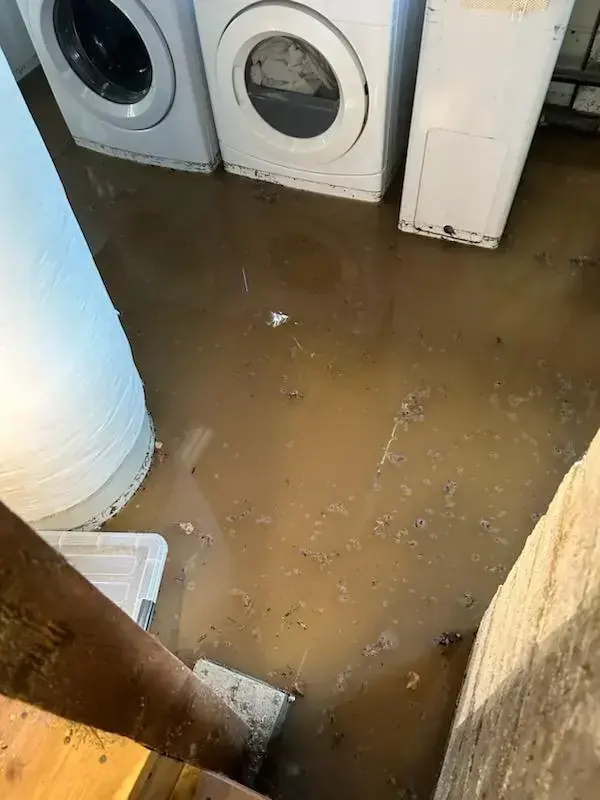
A sewage backup raises a question that a clean-water leak never does: whose pipe is it? In Quincy, the City says property owners maintain and repair the sewer lateral between the foundation and the edge of the sidewalk, and about half of the sewer calls to its Department of Public Works involve those laterals.
Key takeaways
- Quincy property owners maintain and repair the sewer lateral between the foundation and the edge of the sidewalk.
- About 50% of the sewer calls to the Department of Public Works involve laterals, and the other 50% are typically cleanings for debris, grease or roots.
- Sewage is Category 3 water. Porous materials it touches are removed, not dried.
- On request, the City will clean a sewer lateral once per year.
- Stop using water, keep people and pets out of the area and leave the cleanup to a team with protective gear.
Whose pipe is it, from the house to the street
A sewer lateral is the pipe that carries a building's drain water out toward the sewer main. In Quincy the owner's share is spelled out: the lateral between the foundation and the edge of the sidewalk.
A blockage or break in that stretch is the owner's to have cleared and repaired, usually by a plumber with a camera and a cleaning tool.
The camera shows what is blocking the pipe: roots, grease, debris or a section that has collapsed or shifted.
The Department of Public Works can say what applies to a particular building, and the cleanup that follows is described under sewage backup cleanup in Quincy.
The first question in any backup is where the blockage sits. A backup can start in three places:
- Inside the building, in one fixture's drain or in the main house drain
- In the lateral between the foundation and the edge of the sidewalk
- In the City's sewer main or at a pump station
What the City's own numbers say
About 50% of the sewer calls to Quincy's Department of Public Works involve sewer service laterals. The other 50% are typically cleanings for buildups of debris, grease or roots.
MassDEP received City reports of 90 sanitary sewer overflows between 2016 and August 2021, and 2 of them were attributed to wet weather.
In a self-assessment dated 2021, the City said 5 reported overflows involved basement backups. It also tied structural collapses in its sewer mains generally to aging vitrified clay pipe.
Those figures come from City reports of different dates, so they describe the system's history and not a forecast for any one street.
A single clog or a lateral problem?
One fixture backing up points to a clog in that fixture's own drain. Several fixtures backing up together, especially the lowest ones, point to the lateral or the main.
Timing is a clue too. A backup that appears each time a washing machine or a dishwasher drains suggests a partial blockage that a heavy flow overwhelms.
Signs that point past a single fixture include:
- A floor drain or the lowest toilet backs up when a washing machine empties upstairs
- Sink, tub and toilet drains all run slowly at the same time
- A sewer smell rises from a drain and does not fade
- Neighbors on the same street report the same trouble
- The backup clears for a moment after a flush and then returns
First steps during a backup
Sewage is a health hazard from the start, so the early steps are about distance and containment, not cleanup.
- Stop using water in the building, and do not flush, so no more sewage is pushed in.
- Keep everyone, especially children and anyone who is ill, out of the wet area.
- Leave mops, towels and household vacuums alone, since they spread contamination.
- Photograph the water and the damaged belongings from the doorway.
- Call a plumber to find and clear the cause, and a restoration team to start the cleanup.
Reporting a possible main problem
A backup that starts in the street can reach several buildings at once. Reporting it to the Department of Public Works is the right step when the main may be involved.
Neighbors who see the same symptoms are worth a conversation, since a shared cause points toward the main and not toward one household's pipe.
What a Category 3 cleanup removes and treats
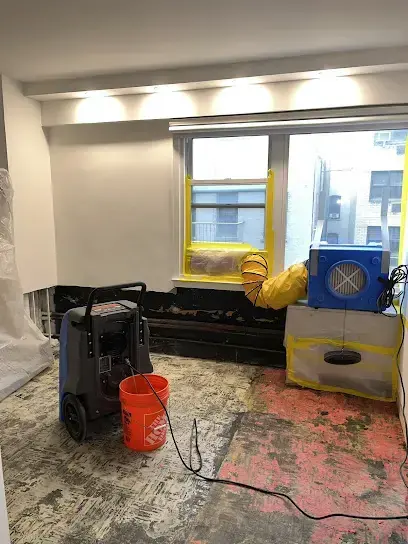
Sewage water is Category 3, which means contamination is the main hazard and drying comes second. Protective gear is worn throughout, and containment keeps the rest of the building clean.
The extraction crew removes the water first, and water extraction in Quincy is the opening step of every sewage job.
Belongings are sorted after that. Hard items can be scrubbed and disinfected, while porous items that sewage soaked are photographed and discarded.
The rest of the work breaks down into four parts:
- Taken out: carpet, pad, wet drywall and insulation that sewage soaked, bagged and removed
- Scrubbed and disinfected: tile, sealed concrete, metal and framing
- Air handled: HEPA air scrubbers filter the air while crews work
- Dried last: dehumidifiers and air movers, checked against fresh readings at every visit
Pump stations and the larger sewer system
Quincy has no wastewater treatment plant of its own, and the MWRA measures much of the city's sewer flow at about 6 locations.
The MWRA owns 5 pump stations in Quincy's sewer system: Merrymount, Houghs Neck, Nut Island, Squantum and Braintree-Weymouth. The City owns 6 sewer pump stations of its own.
Pump stations move sewage where gravity cannot, and they can fail in storms. The Strand pump station had 2 sewer overflows caused by electrical outages during large storm events and was rehabilitated in 2021.
When sewage backs up in several buildings on a street at once, the cause is more likely in the system than in any one lateral.
After the cleanup: the plumbing side
A plumber repairs or replaces the damaged section, and a drain camera can confirm whether the problem sat in the lateral or in the main.
Tree roots are a common cause of lateral blockages, because they follow moisture into pipe joints.
The standard method for any sewage loss is laid out under sewage backup cleanup, and everything else the team handles in the city is listed under water damage restoration in Quincy.
On request, the City will clean a sewer lateral once per year. Roots, grease and debris are the usual causes of repeat backups, so a few habits help.
- Keep grease, wipes and paper towels out of the drains
- Have the lateral inspected with a camera after any backup
- Keep a dated note of each cleaning and each repair
- Ask the Department of Public Works how the yearly lateral cleaning applies to the building
Questions
Who maintains the sewer lateral in Quincy?
The City says the property owner maintains and repairs the sewer lateral between the foundation and the edge of the sidewalk.
Can the City clean a sewer lateral?
On request, the City will clean a lateral once per year. The Department of Public Works is the place to ask how that applies to a particular building.
Why is sewage handled differently from other leaks?
Sewage carries bacteria and viruses. It is classed as Category 3, so contamination is dealt with first and drying comes last.
What happens to soaked carpet and padding?
Both are cut out and bagged, because sewage soaks into fibers and cannot be washed out reliably. Tile, sealed concrete and metal can be scrubbed and disinfected.
What do several backed-up drains at once mean?
Usually a problem in the lateral or the main rather than in one fixture. An inspection with a drain camera shows where the blockage sits.
What is vitrified clay pipe?
It is clay pipe that has been fired and glazed, used in older sewer systems. The City ties structural collapses in its sewer mains generally to aging pipe of this kind.