Water Extraction in Quincy, MA
The sooner standing water leaves a building, the less moisture soaks into carpet, pad, plaster and framing. The extraction crew removes it with truck-mounted and portable equipment and maps what stays wet.
Call (888) 629-3140Quincy water removal help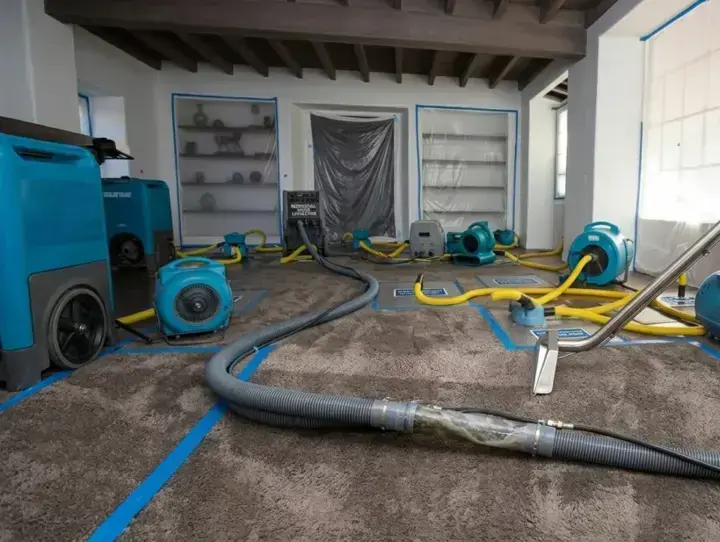
First steps for water extraction and removal in Quincy
- Stop the flow. Close the valve or main if a pipe is the source, and stay out of deep water.
- Lift small items. Raise electronics and rugs onto dry surfaces and leave heavy furniture alone.
- Photograph the water. Photograph the depth and the affected rooms before extraction starts.
- Call for extraction. Early removal keeps water out of pad, plaster and framing.
How water extraction and removal is handled in Quincy
Extraction is the fastest way to limit a loss, because every gallon pulled out is a gallon that cannot soak into plaster, subfloors or framing. In Quincy the water often comes from the coast or a storm: tidal flooding reached the Houghs Neck area on March 2, 2018, heavy rain flooded Interstate 93 in Quincy on July 10, 2025, and a nor'easter hit in September 2026.
What does water extraction and removal cost in Quincy, MA?
Water extraction in Quincy usually runs $600 to $1,500 for one room, $1,500 to $4,500 when extraction is paired with drying across several rooms or a basement, and $4,500 to $15,000 for deep or contaminated water.
One room
- Portable or truck mounted extraction
- Carpet, pad or hardwood
- Clean water
Extraction plus drying
- Several rooms or a basement
- Moisture mapping afterward
- Air movers and dehumidifiers
Deep or contaminated water
- Pumps for deep standing water
- Gray or black water handling
- Soaked pad and materials removed
Ranges are typical, not a quote: the category of water, the square footage, the material class and how fast drying started move the number most. The water damage cost calculator gives a closer range.
The water extraction and removal process, step by step
The tech who does the walkthrough maps moisture before any equipment goes down, so the drying plan matches what is actually wet. Equipment stays until the readings say dry.
Assess
Depth, water category and the surfaces involved decide the equipment.
Extract
Pumps, wands and truck-mounted units remove the standing water.
Map moisture
A meter and thermal camera mark what is still wet.
Hand off to drying
Equipment is placed from the readings and checked each visit.
Choosing the right extraction method
Truck-mounted units pull the most water and suit large carpeted areas, while portable extractors and wands reach closets, stairs and tight rooms. Submersible pumps handle standing depth, and wet vacuums clear what is left on hard floors. Hardwood and tile are extracted carefully so water is not pushed into seams. Extraction works best when it starts early, because carpet pad acts like a sponge and releases water slowly into the floor below.
- Standing water on floors, stairs and landings
- Water trapped in carpet and the pad below
- Pooled water on hardwood, tile and vinyl
- Deep water pumped from low rooms
What happens after the water is out
Extraction removes the liquid, not the moisture in the structure, so a meter and thermal camera map what is still wet. Carpet pad that cannot be saved is cut and removed, baseboards come off where walls are wet, and drying equipment is placed from the readings. Each room gets a written reading before and after extraction, which gives the insurer a clear picture of how far the water traveled.
Extracted areas move straight into structural drying for as many days as the readings require.
Clean, gray and black water
Water category changes the work. Clean supply water can usually be extracted and dried, gray water from appliances needs more care, and sewage or flood water is Category 3, so soaked porous materials are removed and surfaces are cleaned before drying. Sewage backup cleanup follows that same containment approach.
Water Extraction and Removal across Quincy and nearby towns
Extraction runs across Quincy, from coastal work in Houghs Neck, Adams Shore, Wollaston and Squantum to apartment buildings around Quincy Center, North Quincy and Quincy Point and homes in West Quincy.
The same service nearby: water extraction and removal in Brookline, Milton, Dedham.
Water Extraction and Removal questions in Quincy, MA
Water Extraction and Removal in Quincy, 24/7
Standing water in a Quincy building? The extraction crew brings truck-mounted and portable equipment and maps what stays wet.
(888) 629-3140 Quincy water removal helpHow fast should standing water be removed?
As early as possible. Carpet pad holds water like a sponge and wicks it into subfloors, so removal in the first day or two keeps the drying job smaller.
Can hardwood floors be saved after extraction?
Often, if water is removed quickly and floor drying panels start before boards cup badly. Readings decide whether boards can stay or must be replaced during repairs.
What is the difference between extraction and drying?
Extraction removes liquid water with pumps and extractors. Drying then removes the moisture held in materials, using air movers and dehumidifiers, and it is measured with a meter rather than judged by feel.
Is flood water from a nor'easter handled differently?
Yes. Coastal and storm flood water is treated as Category 3, so soaked porous materials are removed, surfaces are cleaned and treated, and extraction happens under contamination controls.
Does insurance cover water extraction?
Extraction is usually part of a covered loss when the water is sudden, such as a pipe failure or appliance leak. Flood water often needs separate flood coverage, so the policy and its wording matter.
Water left standing keeps spreading
Carpet, pad and framing absorb more moisture with every passing day, so removing the water early shortens the drying and trims the repair.
Call (888) 629-3140Call for Quincy water removal