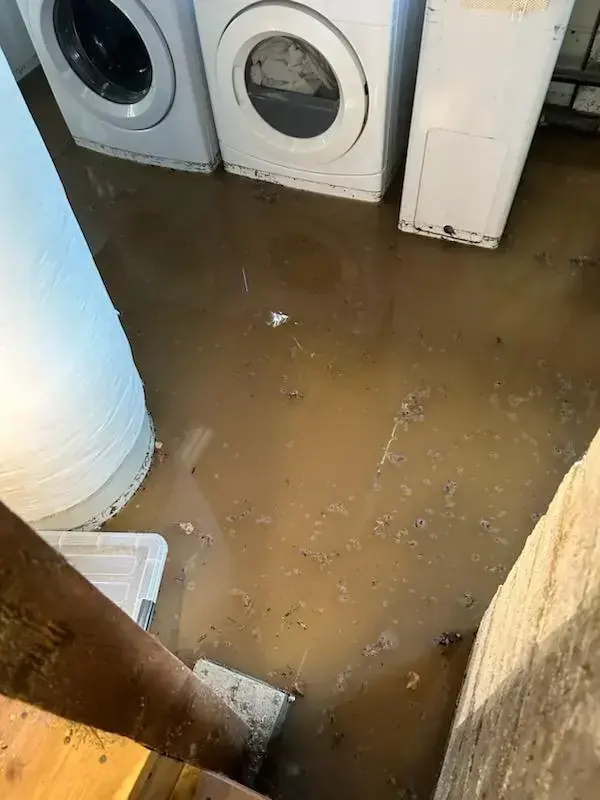
Wellesley's Department of Public Works spells out two things that matter in a sewer backup: who owns the sewer service and when a building needs a backwater valve. Both come from the town's Sewer Service Connection Procedures and Specifications, last revised in July 2025.
Key takeaways
- The building owner is responsible for the entire sewer service from the building foundation to the town sewer main.
- Repairs to that service are inspected by the DPW Engineering Division and made at the owner's expense.
- A backwater valve is required when there is less than three vertical feet between the crown of the public sewer and the invert of the sewer cleanout in the building.
- The valve goes on the lowest branch of plumbing and is subject to inspection by the Wellesley Plumbing Inspector.
- Wellesley's DPW says flushed wipes cause backups, including wipes labeled flushable.
What a backwater valve does
A backwater valve is a one-way gate in a building's drain. It lets wastewater leave and closes when sewage tries to flow back in from the sewer.
In Wellesley it goes on the lowest branch of plumbing, which is where backed-up sewage would reach the building first.
Most designs have an access cover, so the gate can be inspected and cleaned without opening the floor.
A valve cannot clear a clog and does not replace a cleaning tool or a camera. When one is missing or fails, the result is a Category 3 loss, handled under sewage backup cleanup in Wellesley.
In short, a backwater valve:
- Lets drain water leave the building in the normal direction
- Closes when sewage pushes back from the main
- Does not clear a blockage inside the building
- Needs inspection, because debris caught in it can keep it from sealing
When Wellesley requires one
The town's specifications require a backwater valve inside a building when there is less than three vertical feet between the crown of the public sewer and the invert of the sewer cleanout in the building.
Both words measure height. The crown is the top of the public sewer pipe, and the invert is the lowest inside point of the cleanout in the building.
In plain terms, the closer a building's lowest drain sits to the level of the sewer in the street, the easier it is for sewage to push back in.
Whether a particular building falls under that rule depends on measurements at the cleanout and at the public sewer, which is a question for a plumber.
The valve is subject to inspection by the Wellesley Plumbing Inspector. Plumbing and gas permits go through the Plumbing & Gas Inspector in the Building Department, and the work follows the Uniform State Plumbing Code, 248 CMR 10.00.
Who owns which part of the pipe
Wellesley's DPW says homeowners are responsible for maintaining and repairing water and sewer connections from the foundation of the property to the main sewer connection or the water curb stop.
The Sewer Service Connection Procedures and Specifications add that the building owner is responsible for the entire sewer service from the building foundation to the town sewer main. Repairs are inspected by the DPW Engineering Division and made at the owner's expense.
- Owner: the entire sewer service, from the building foundation to the town sewer main
- DPW Engineering Division: inspects repairs to that sewer service
- Wellesley Plumbing Inspector: inspects a backwater valve where one is required
What the DPW says about wipes
Wellesley's DPW says flushing wipes, paper towels and similar products clogs sewers and causes backups and overflows. It adds that wipes labeled flushable do the same.
These belong in the trash, not the toilet:
- Wipes of every kind, including those labeled flushable
- Paper towels
- Similar products that do not break down the way toilet paper does
Where the clog forms
A clog from these products can form inside the building's own drain or out in the sewer service, and either one can push water up through the lowest fixture.
That is why a single backup does not say much about the cause. A camera inspection of the drain and the sewer service shows where the blockage sits.
First steps when a drain backs up
A sewer backup is a health hazard from the start, so the early steps are about distance, not cleanup. A floor drain at the lowest level is often where water shows first, and the same steps apply wherever it appears.
- Stop using water and do not flush until the cause is found.
- Keep people and pets out of the wet area, and avoid touching the water.
- Photograph the water and any damaged belongings from the doorway.
- Have a plumber find the clog and check whether a backwater valve is present.
- Report it to Wellesley's DPW if the problem may be in the town sewer main.
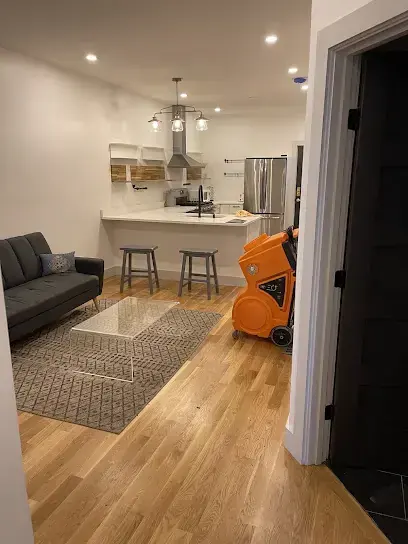
- Call a restoration team for water extraction in Wellesley and the cleanup.
What a sewage cleanup involves
Sewage is Category 3 water. The team wears protective gear, contains the area and removes the water first.
Carpet, pad, wet drywall and insulation that sewage soaked are cut out and bagged, because contamination settles deep into porous materials.
Hard surfaces and framing are cleaned and treated, the air is filtered and drying starts last.
After the area is treated, belongings are sorted: hard items are washed, and porous items that sewage soaked are photographed and discarded.
Once the plumbing is repaired, the backwater valve, where the specifications call for one, is inspected by the Plumbing Inspector.
Where Wellesley's sewage goes
Wellesley is part of the MWRA wastewater system. Its sewage flows through MWRA collection sewers to the Deer Island Wastewater Treatment Facility.
A building's sewer service joins the town sewer main, which is why the owner's responsibility described by the DPW ends at the main and the town's system begins there.
The standard method for any sewage loss is laid out under sewage backup cleanup, and everything else the team handles in town is listed under water damage restoration in Wellesley.
Habits that lower the chance of a repeat
- Keep wipes and paper towels out of the toilet
- Ask a plumber whether the building has a backwater valve and whether it works
- Keep the area around the cleanout clear so the access cover can be reached
- Keep photos and a dated note of any repair
Questions
What is a backwater valve?
It is a one-way gate in a building's drain that lets wastewater out and closes when sewage tries to flow back in. In Wellesley it goes on the lowest branch of plumbing.
When does Wellesley require a backwater valve?
When there is less than three vertical feet between the crown of the public sewer and the invert of the sewer cleanout in the building. The Plumbing Inspector inspects it.
Who is responsible for the sewer pipe on a Wellesley property?
The building owner is responsible for the entire sewer service from the building foundation to the town sewer main. Repairs are inspected by the DPW Engineering Division and made at the owner's expense.
Can flushable wipes cause a sewer backup?
Yes, according to Wellesley's DPW. Wipes, paper towels and similar products clog sewers, and wipes labeled flushable do the same.
Why is sewage cleanup done with protective gear?
Sewage carries bacteria and viruses and is classed as Category 3, so the team contains the area, removes soaked porous materials and treats what remains.
What should be photographed after a sewer backup?
The water and its path from the drain, the floor and walls it reached and each damaged belonging, taken from the doorway before anyone walks through.