Ice Dam and Roof Leak Water Damage in Wellesley, MA
Meltwater that backs up under shingles soaks insulation and ceilings before anyone sees a stain, so the restoration team traces the wet path from the roof edge down through the house.
Call (888) 629-3140Report a Wellesley roof leak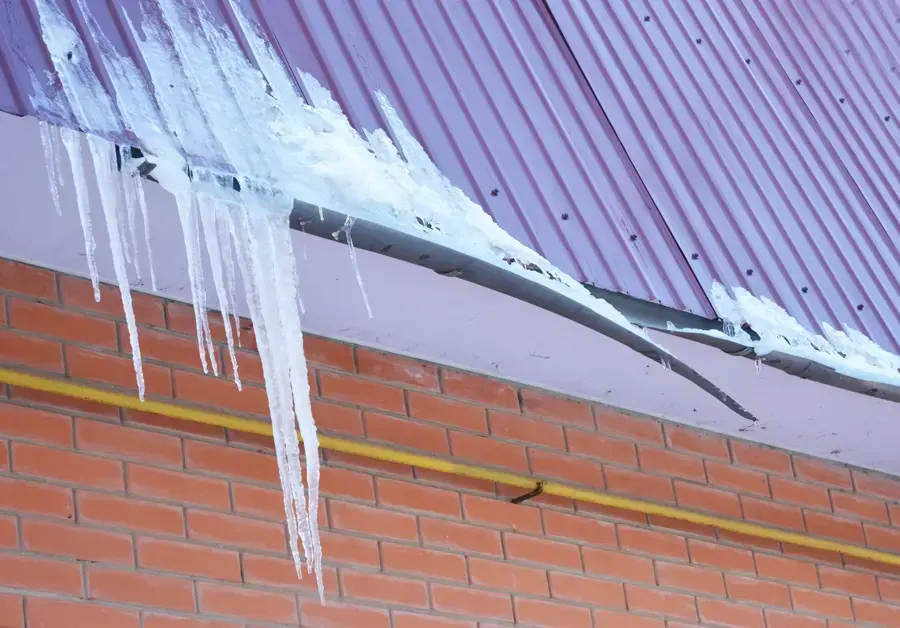
First steps for ice dam and roof leak water damage in Wellesley
- Find the wet path. Meters and a thermal camera follow the water from the roof edge through the attic, ceiling and any wall cavity below.
- Remove wet insulation. Soaked batts and blown-in material are bagged and carried out, since insulation that stays wet keeps moisture against the framing.
- Open only what is wet. Sagging or stained ceiling sections are cut back to dry material, and small access holes serve the cavities that can dry in place.
- Dry and log. Air movers and dehumidifiers run until attic, ceiling and wall readings match the dry goal, with each visit photographed.
How ice dam and roof leak water damage is handled in Wellesley
An ice dam forms when heat escaping from the house melts the snow on the roof and the meltwater refreezes at the cold eaves, building a ridge that holds water back. That water finds nail holes and seams, runs into the attic, and often reaches the ceiling below with no sign for days. Plaster ceilings can look fine while the layer behind them stays wet. In a Wellesley house, the first job is finding how far it traveled.
What does ice dam and roof leak water damage cost in Wellesley, MA?
A ceiling caught early after a thaw usually runs $1,500 to $3,500, ceilings plus wall cavities run $3,500 to $9,000, and sagging plaster across several floors runs $9,000 to $18,000, with the attic work and equipment days driving the spread.
A single stained ceiling
- Attic and ceiling readings
- Wet insulation bagged out
- Ceiling dried where it hangs
Ceilings plus wall cavities
- Several top-floor rooms
- Outer walls opened and dried
- Photo log with daily readings
Plaster down on several floors
- Sagging plaster taken down safely
- Water followed to lower floors
- Containment and longer drying
Ranges are typical, not a quote: the category of water, the square footage, the material class and how fast drying started move the number most. The water damage cost calculator gives a closer range.
The ice dam and roof leak water damage process, step by step
The tech who does the walkthrough maps moisture before any equipment goes down, so the drying plan matches what is actually wet. Equipment stays until the readings say dry.
Map the leak
Meter attic, ceiling and walls to draw the wet boundary first.
Clear the wet
Bag soaked insulation and take down ceiling that has lost its strength.
Dry it out
Run air movers and dehumidifiers, adding panels where plaster or framing holds water.
Confirm dry
Take final readings in every area opened and hand over the photo and moisture log.
Where the water goes after it gets under shingles
Meltwater soaks the attic insulation first, then wicks into the ceiling drywall or plaster and drips down wall cavities along exterior walls. Wet insulation loses its value and holds moisture against the framing, so it is bagged and removed rather than dried. Insulation that stayed dry is left in place.
- Attic decking and rafters are metered for moisture content
- Ceilings are scanned with a thermal camera for cold, wet zones
- Exterior wall cavities are probed through small holes
- Photos tie each wet spot to a roof location
Roof leaks are different from ice dams
A failed flashing or lifted shingle can leak in any season, and wind-driven rain finds the same weak points an ice dam does. The wet area is often smaller and the water stays clean, but the inside work is identical: trace, extract, dry and verify.
Flashing at chimneys, valleys and dormers is a common entry point, and the water often shows up far from the leak, which is why the moisture map matters.
Snow weight and older Wellesley roofs
On February 1, 2021 the weight of snow sent a large tree through a Wellesley roof and into the second floor. Not every case is that dramatic, but snow loads, many homes built before 1940 and a humid climate all raise the odds of water finding a way in.
Insurers ask where roof water entered, so the file pairs exterior photos of the roof edge with attic photos and the moisture map that shows the wet path.
Once a roofer has stopped the leak, the drying team finishes the interior with structural drying, and a stained or sagging ceiling follows the ceiling leak routine.
Ice Dam and Roof Leak Water Damage across Wellesley and nearby towns
Roof leak and ice dam work runs across Wellesley, from Wellesley Hills and Wellesley Fells to Wellesley Square, Lower Falls, Wellesley Farms and Babson Park, with attic access checked before any ceiling is opened.
The same service nearby: ice dam and roof leak water damage in Brookline, Needham, Dedham.
Related water damage services in Wellesley
Ice Dam and Roof Leak Water Damage questions in Wellesley, MA
Ice Dam and Roof Leak Water Damage in Wellesley, 24/7
Seeing a stain under a roof edge? Describe it and the drying team will explain what to check.
(888) 629-3140 Ask about a Wellesley roof leakDoes an ice dam always mean the ceiling is wet?
Not always, but meltwater often soaks attic insulation before any stain shows, so a thermal scan and moisture meter check of the ceiling is the only reliable way to know.
Should wet attic insulation be dried or thrown out?
Thrown out in most cases. Insulation that stays damp holds water against the roof deck and framing, so it is bagged and removed while the dry sections are left alone.
Who fixes the roof, and who dries the house?
A roofer stops the leak at the source. The drying team handles everything wet inside, from attic insulation to ceilings and wall cavities, and documents it for the adjuster.
Can a plaster ceiling be saved after a roof leak?
Often yes when it is caught early. Plaster that is dried in place with panels and airflow can stay, while sections that sag, crumble or stay wet are cut out for safety.
How long can hidden roof water sit before it spreads?
Water keeps moving with every thaw cycle or rain, so a slow leak can wet the same framing for weeks. Mold can also start in 24 to 48 hours once materials stay damp.
What does the insurance file need for a roof leak?
The file needs dated photos of the roof edge, attic and ceiling, the moisture map, daily readings and a plain statement of when the snow, thaw or storm happened.
Meltwater in the attic gets worse with every thaw
Get the wet path mapped, the soaked insulation out and the ceiling drying before the next storm or thaw adds more water to the same framing.
Call (888) 629-3140Start a Wellesley attic check